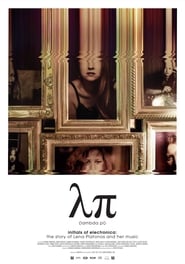
Lena Platonos
Known for: Sound
Lena Platonos (Greek: Λένα Πλάτωνος, Heraklion, Crete, 21 October 1951) is a Greek pianist and composer of electronic and art music. She starred in the electronic scene of the 1980s, while her work was an inspiration for Greek electronica musicians in the following decades. However, she grew up in Athens. She studied at the Athens Conservatory under the guidance of Phoebe Vallinda and Marika Papaioannou, and became a professional pianist before she turned eighteen, while in 1963 she won the First Prize of the Kaiti Papaioannou Competition. She left with a scholarship to study abroad, first at the Vienna Academy and then in Berlin, where she came into contact with rock, jazz and oriental music. She did not complete her postgraduate studies. She returned to Greece during the dictatorship and collaborated with Iraklis Triantafyllidis and his band DNA, only to flee again in 1975 to Berlin and return permanently in the summer of 1976. Together with her then husband, composer Dimitris Maragopoulos, she began collaborating with the Third Program of the Greek Radio, where she met Manos Hadjidakis, who was then the director of the Third Program. She developed a long-standing professional and friendly relationship with Hadjidakis. She participated as a composer in the show Edo Lilipoupoli; some of the show's most famous songs, such as Rosa-Rosalia and The Dance of the Peas, are her own compositions. Her personal debut in discography was with the album Sabotage in 1981, created in collaboration with Marianina Kriezi, Savina Giannatou - with whom she had also collaborated in Lilipopolis - and the singer Yannis Palamidas. The album was characterized as pioneering for Greek standards, both for the composition and lyrics and for the use of the synthesizer - with which Platonos had begun to experiment a short time before - for the first time so intensely in Greek discography. This was followed by the release of 13 poems set to music by Kostas Karyotakis, a work that had been completed before Sabotage but was released second at the insistence of Lyra's director, Alekos Patsifas. The following year, Manos Hadjidakis's '62' was released, with minimal electronic arrangements of 12 of the composer's songs. Three personal albums followed, which defined her mark in Greek electronic music and served as a reference point for future efforts: Masks of the Sun (1984), Gallop (1985), Lepidoptera (1986). In between the above, the album Echo and Her Mistakes was released with children's songs to lyrics by Gianni Rodari, while in 1986 Platonos collaborated with the other pioneers of electronic music in Greece, Michalis Grigoriou and Vangelis Katsoulis, on the project Music for Keyboards. In 1989, the children's opera The Emperor's Nightingale was released, based on Andersen's fairy tale of the same name, and in terms of recordings, the 1980s closed with two more albums of lower tones and darker style, The Breaking of the Ice with Yannis Palamidas in 1989, based more on piano and natural instruments, and Don't Mess Up My Circles in 1991. In 1990, Platonos collaborated with Dionysis Savvopoulos in live appearances and on his album Retrospect '63-'89 and in 1991 with Dimitra Galani for Myths of Europe where she orchestrated songs by Lennon, Weil and others.